 09642 602507


Overview
In Vitro Fertilisation (IVF) is the most trusted type of Assisted Reproductive Technology (ART) to help couples and individuals achieve a successful pregnancy. Widely known as the test tube baby procedure, IVF has been supporting conception when natural methods fail to do so. Its high success rates and flexibility make IVF treatment one of the most vital options in modern reproductive health and care. In this article, we will delve into this new fertility treatment, who it's for, how it works, trends in Bangladesh, and what to expect from fertility clinics.
What is In Vitro Fertilisation (IVF)?
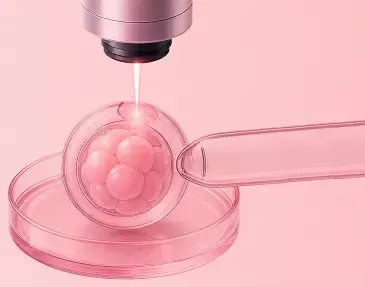
IVF Treatment is a medical facility used to assist couples who are unable to conceive with natural methods. The process includes the collection of eggs from the female partner and fertilising them with sperm, taken from the male partner, in a laboratory setting. The treatment is recommended for various types of fertility disorders affecting one or both partners. These disorders can range from a blocked fallopian tube in females to severe male infertility. This method skips many common causes of infertility that hinder a successful conception. With the advancements in technology, IVF has become one of the most successful fertility treatments, generally without any risks or complications.
Who Should Consider IVF Treatment?
IVF treatment is generally recommended for couples facing continuous failure in conceiving due to various biological and physical challenges. These may include:
- PCOS (Polycystic Ovary Syndrome) : An ovulation hormonal disorder, which causes irregular or missed periods.
- Blocked tubes : Blocked fallopian tubes block eggs from travelling to the uterus naturally.
- Low sperm count or motility : The lower the sperm mobility or sperm count of the male partner, the lower the chances of a successful conception.
- Endometriosis : Endometriosis is another fertility disorder occurring in females, which affects tissue growth outside the uterine wall, eventually affecting fertility.
- Fertility loss with increasing age : Infertility may become common for women over 35 years.
- Repeated failure in fertility treatments : Repeated IVF failure may be aided with additional fertility procedures to increase your chances of conception.
A series of tests and counselling sessions are done to understand the reason for infertility in the patient and to confirm the suitability of the patient to undergo this procedure.
What is the IVF Process?
The IVF Treatment follows a series of well-tested and medically supervised steps, performed after various blood and other related physiological tests. Here is a step-by-step guide to the IVF procedure:
- Ovarian Stimulation : Hormones stimulate the ovaries to develop several eggs.
- Egg Retrieval : Eggs are retrieved from the ovaries under a minor clinical procedure.
- Sperm Collection : A sperm sample is drawn and prepared in a laboratory.
- Fertilisation : The sperm and eggs are mixed in a laboratory environment.
- Embryo Development : Fertilised eggs are observed for normal development.
- Embryo Transfer : A chosen embryo is transferred into the uterus.
- Pregnancy Test : 10–14 days later, a blood test verifies whether implantation took place.
IVF Success Rates in Bangladesh
The success rates of an IVF Treatment largely depend on various factors, whether in Bangladesh or anywhere else. These factors may include:
- Age and medical history of the patient.
- Family history of patients.
- Quality of egg and sperm.
- Uterine health and related disorders.
Now, let’s take a look at the age-wise trends in results for this procedure in Bangladesh:
| Age Range | Trends in IVF Results |
|---|---|
| Under 35 | Women under the age of 35 have the highest success rates in IVF treatment |
| Between 35 – 37 | In this age range of women, the success rates dip a little. |
| Between 38 – 40 | For women in this age range, the success rate for IVF decreases further |
| Over 40 | The success rate dips lower. It is at its lowest when compared to the other age categories. |
IVF Cost in Bangladesh
When considering an advanced treatment like IVF, financial concerns are too common. However, the IVF treatment cost in Bangladesh can vary depending on various factors, some of which are:
- Extra IVF cycles : This is quite common, as it is a bit rare to achieve a successful pregnancy in the first IVF cycle.
- Additional Fertility Procedure : Some couples may require additional fertility procedures other than IVF itself, such as ICSI.
- Individual’s Health Profile : This is also a crucial factor in deciding the cost of IVF, as some patients may require extra medications or diagnostic tests as per their health profile.
- Geographical Location : The location of an infertility clinic may also affect the cost of an IVF treatment. For example, a fertility clinic in a metro city may cost more than one in a remote area.
To get the exact estimate of your IVF treatment in Bangladesh, you can connect with the Indira IVF consultants.
Why Choose Indira IVF for IVF Treatment in Bangladesh?
Among the clinics offering IVF in Bangladesh, Indira IVF stands out for its patient-focused care and ethical medical approach. Here are some key reasons why Indira IVF should be your first choice:
- Easily accessible and well-connected to different locations in the vicinity.
- A team of experienced and expert embryologists and lab technicians will give you the best possible result.
- Equipped with state-of-the-art technology and modern equipment.
- Modern and international standard infrastructure to provide the best experience at the centre.
- Individualised treatment plans to fit the needs of every patient.
Frequently Asked Questions
Under proper assessment and advice, IVF is safe for women above this age.
Eligibility depends on the results of fertility tests, the ovulation cycle, and the reproductive system.
You might require hormone profiles, ultrasound scans, semen tests, and medical history.
Generally, health insurance does not cover the cost of IVF treatment. But, it is better to check with your insurance provider before starting your treatment.
For some, there could be cramping, mood swings, or bloating. Symptoms are closely watched by doctors.
IVF is legally practised and commonly accepted in Bangladesh, provided that it is performed within ethical parameters.
Yes. Most clinics provide embryo storage facilities for those who wish to plan.
If successful, pregnancy can be diagnosed by a blood test 10 to 14 days following transfer.
Yes. Most individuals have more than one cycle, depending on physician advice and health outcomes.
Visit us at Indira IVF Hospital in Dhaka, Bangladesh
Indira IVF, 6th Floor, 27 Shaptak Square, Dhanmondi Road No. 16 (old 27), Dhaka 1209

Meet Top Fertility Specialists in Bangladesh at Indira IVF



Why Choose Indira IVF Dhaka for Your Fertility Journey?

Accessibility
Making advanced laboratories and world-class technology easily accessible at Indira IVF Clinic in Bangladesh.

Affordability
Providing budget-friendly IVF price in Bangladesh so that every couple can get top-notch fertility

Assurance
Assurance from top fertility experts and technology for maximum success chances.

Awareness
Empowering patients to make the right choices through our transparent care & step-by-step guidance.

Advanced IVF Technology
Using advanced IVF technology and modern fertility solutions to support every step of your parenthood journey.

Fertility care under one roof
Complete fertility consultation, diagnosis, and treatment services available in one place.
